
Controlled Intake
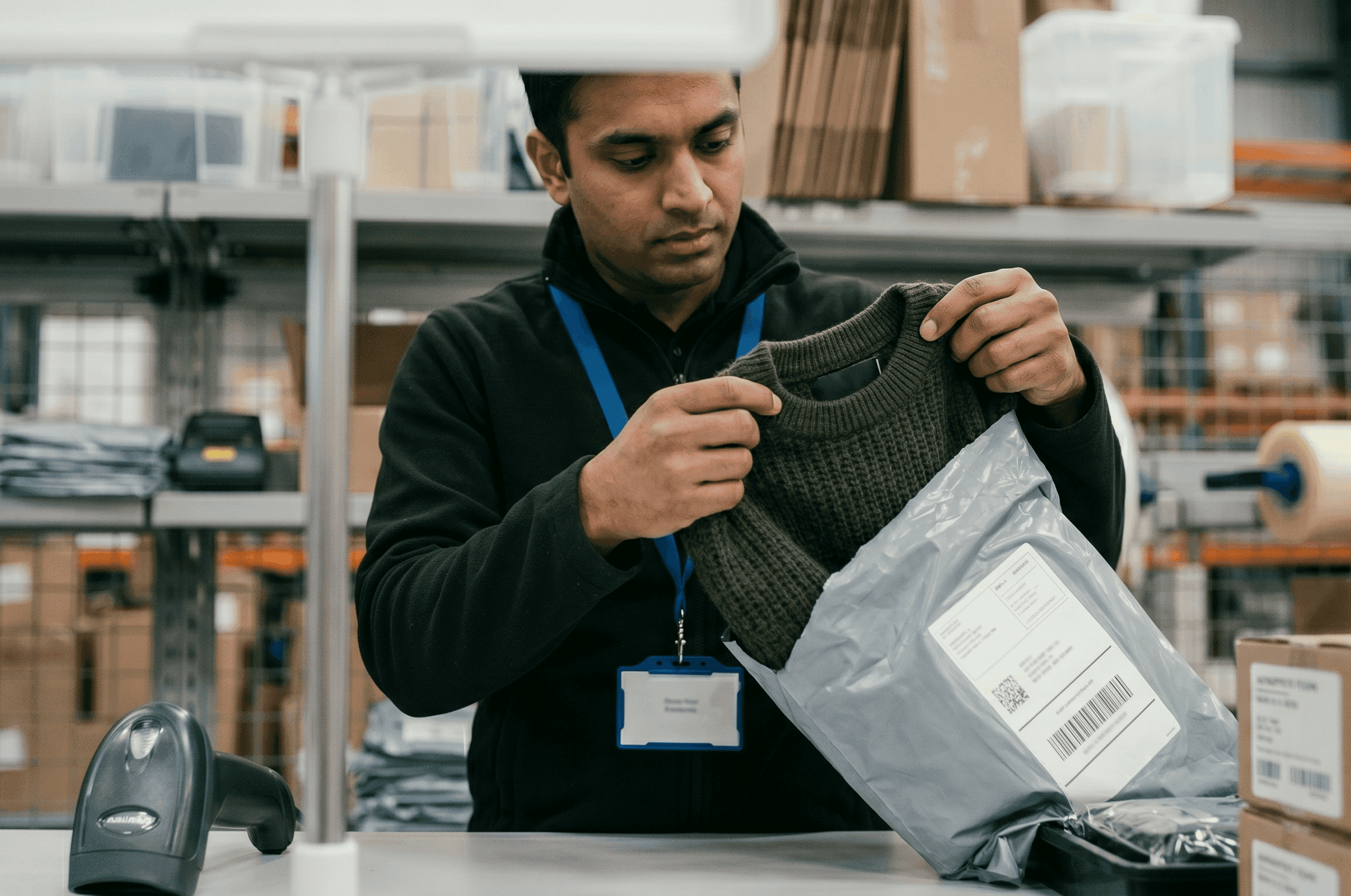
Every return is booked in, tracked, and assigned on arrival. Nothing enters the operation without a record. No loose parcels sitting unaccounted for.
Returns handled properly. Not just received.
Returns are where weak operations show. As part of your fulfilment operation, every return moves through a defined process - logged, assessed, actioned, restocked. No backlog. No blind spots. No margin leak.
Most returns issues are not caused by volume. They are caused by a process that was never properly designed.
What that looks like in practice:
Returns become a backlog. Backlog becomes margin loss. Margin loss becomes a customer experience problem.
Every return moves through four clear stages. No loose items. No manual guesswork. No decisions made on the spot.
Every return is booked in, tracked, and assigned on arrival. Nothing enters the operation without a record. No loose parcels sitting unaccounted for.
Items are assessed against defined criteria and graded clearly. Clear outcomes, documented. No vague notes, no grey areas.
Resellable stock goes back into live inventory quickly. It does not sit in a returns cage waiting for someone to action it. Speed here directly affects stock availability and order fulfilment.
You receive clear data on return volumes, reasons, grades, and processing times. No chasing for updates. No end-of-month surprises.
Returns stop being a problem and become a controlled part of the operation.

Most returned items are recoverable with the right handling. Without a proper process, they sit, degrade, or get written off by default. With one, the majority go back into sale.
The right handling turns a write-off into recovered margin. That compounds quickly at volume.
Returns should not be a blind spot. You should not have to chase your 3PL to find out where a return is, what condition it was in, or whether it has been restocked.
You get clear status across:
Clear status. Clear progress. No guesswork.
Whether it is a steady daily flow or a large batch project, the process stays consistent.
Returns are often manageable at low volume. Problems emerge when volume rises and the process underneath is not built for it: peak periods, product launches, seasonal spikes, or a sudden surge from a promotion.
Our setup is designed to handle increased volume without the process breaking. The structure does not change when it gets busy. That is the point of having a structure.
This page is for fulfilment buyers who need returns to sit inside the same operational structure as outbound orders, stock control and customer service visibility.
Only need a UK returns address without full fulfilment? See our standalone UK Returns Processing service.
Returns processing is priced per parcel against your defined inspection and grading scope, sitting alongside your fulfilment pricing rather than as a hidden add-on. Bulk projects and seasonal overflow are priced separately.
These are the questions full-fulfilment buyers usually ask before trusting a 3PL with returns, restocking and margin recovery.
Returns sit alongside outbound fulfilment in the same operational structure. Returned stock is logged, inspected, graded and, where appropriate, put back into live inventory so it can be sold again without a disconnected manual process.
Resellable items are returned to live inventory within defined SLAs. Items needing rework pass through processing first. Damaged or unsaleable items are flagged so they are not accidentally sold.
Return reasons are captured using defined reason codes during inspection. Reporting can be reviewed by SKU, channel and time period, which helps with product quality decisions, supplier conversations and customer service trends.
Yes. Shopify, Amazon FBM, eBay, TikTok Shop, WooCommerce and other channels can be handled through the same returns flow, with channel attribution retained in reporting.
Grading criteria are defined per client during onboarding. The standard framework covers condition, packaging and completeness, then adds product-specific checks such as seal intact, batch valid, accessories present or expiry date acceptable.
Standard returns are processed within defined SLAs of arrival, with resellable stock returned to inventory shortly after. The same process holds during peak periods, launches and seasonal spikes.
We handle relabelling, rebagging, repackaging, bundle rebuilding, light refurbishment and barcode replacement. Larger or unusual rework projects are scoped and priced separately.
Damaged or unsaleable items are logged, photographed where required, and disposed of with an audit trail. Recoverable damage can be flagged for supplier, courier or insurance claims.
You get live status across received, in inspection, restocked and pending decision, plus reporting on volumes, return reasons, grades, processing times and recovered value.
Subscription returns often need different handling, such as re-bundling, replacement of consumed elements and condition checks. That process is defined during onboarding as part of your account scope.
The operation is built for volume rather than retrofitted for it. The same intake, inspection, action and reporting process runs whether the flow is 100 returns a day or 1,000.
Returns are priced per parcel processed, with rates based on your inspection and grading scope. It sits alongside your fulfilment pricing rather than being treated as a hidden add-on. Bulk projects and seasonal overflow are priced separately.
We will review how your current returns process runs and where the gaps are. Then show you how it would work inside a structured fulfilment setup.
No obligation. Just a straight conversation about what is actually happening and what better looks like.